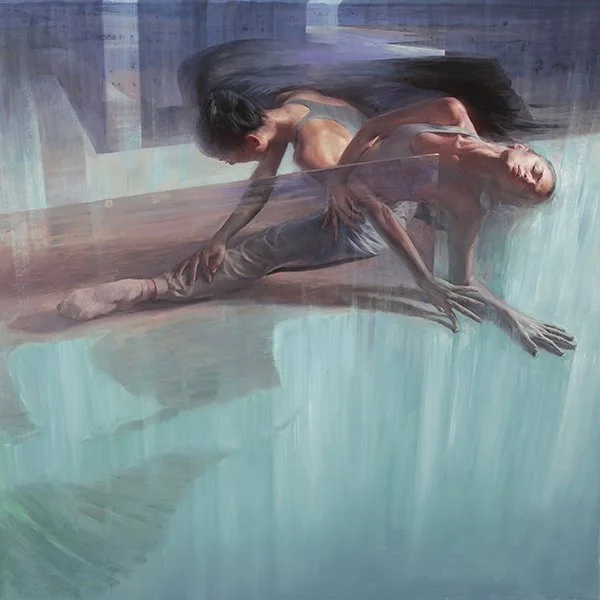
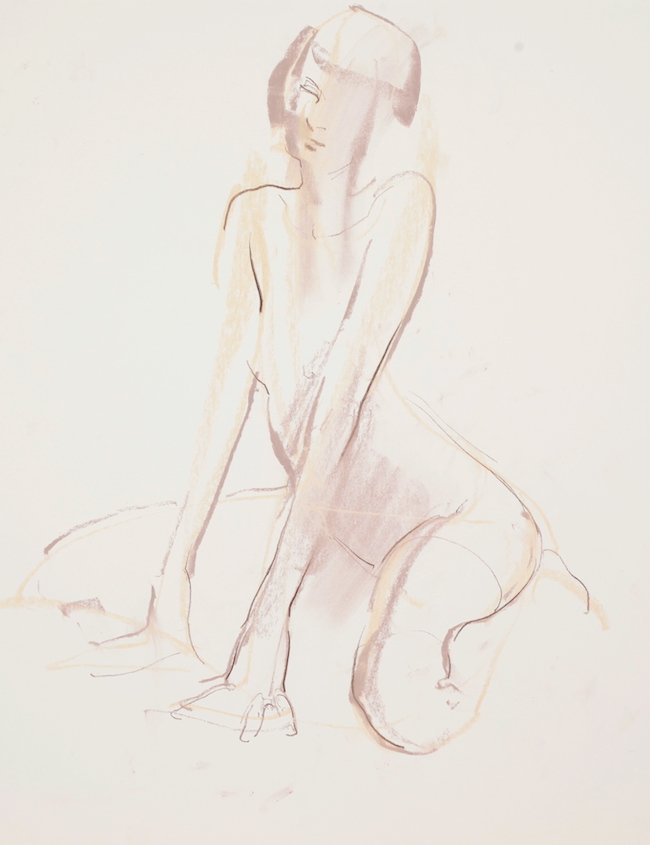
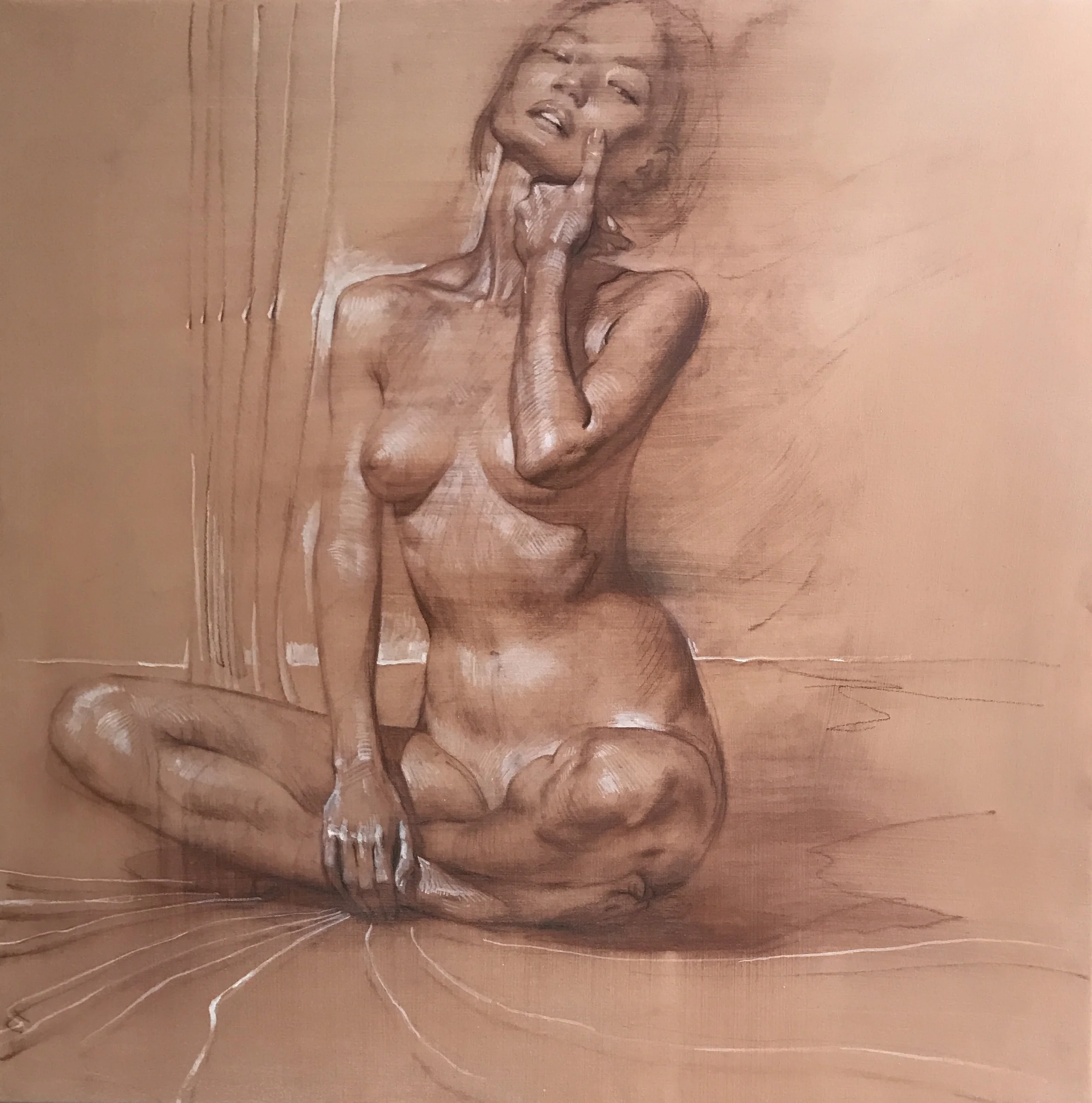
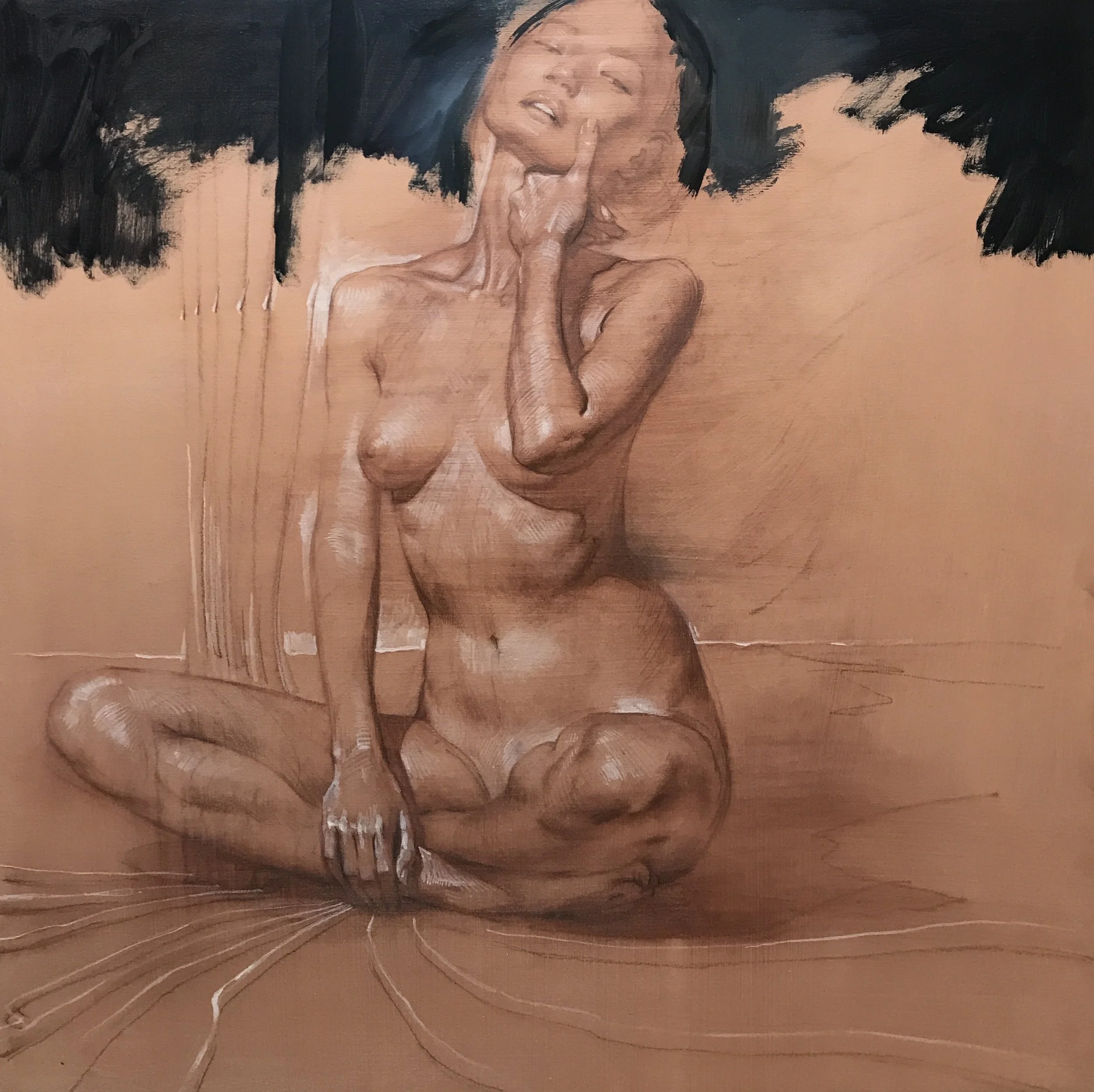
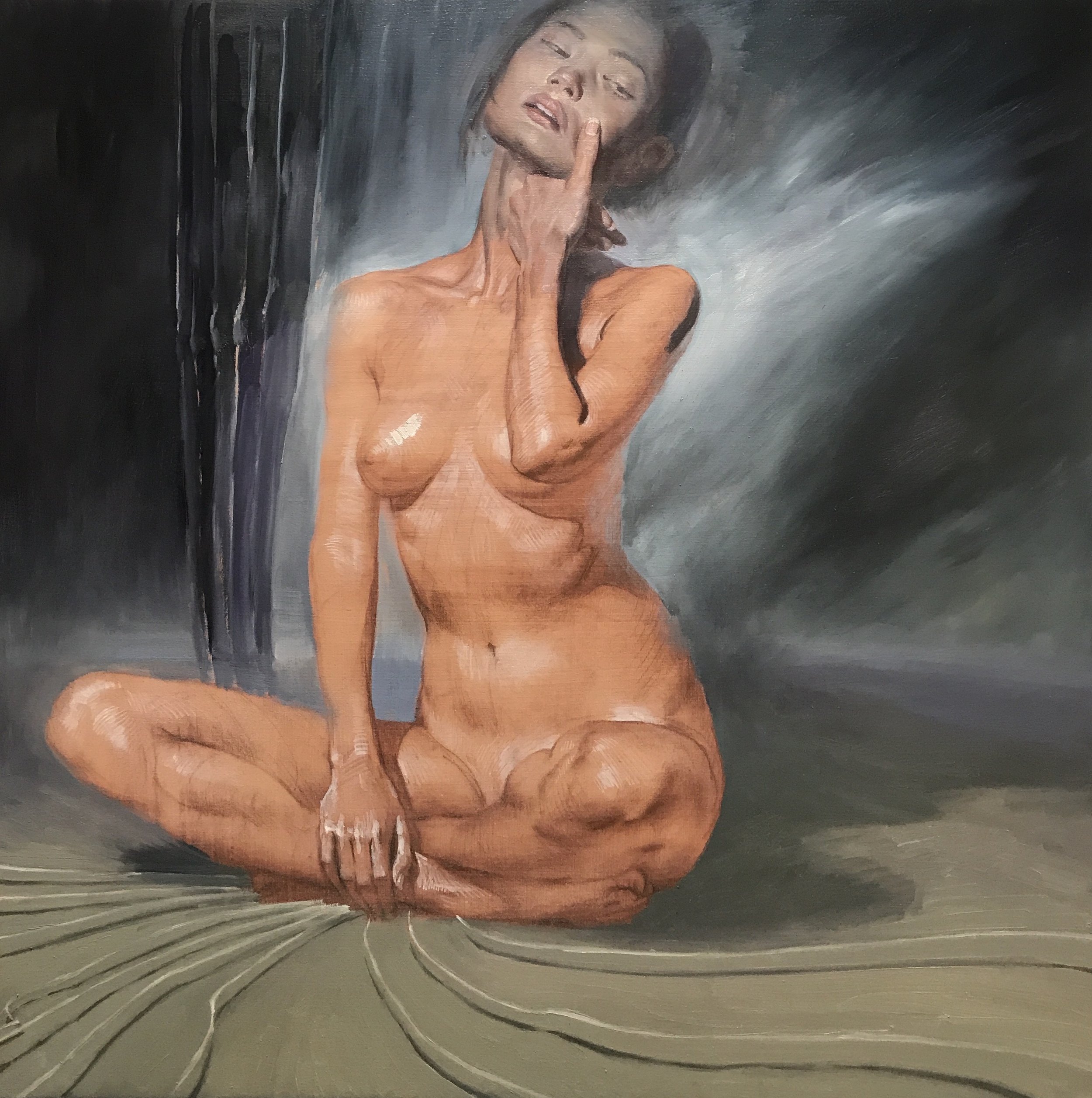
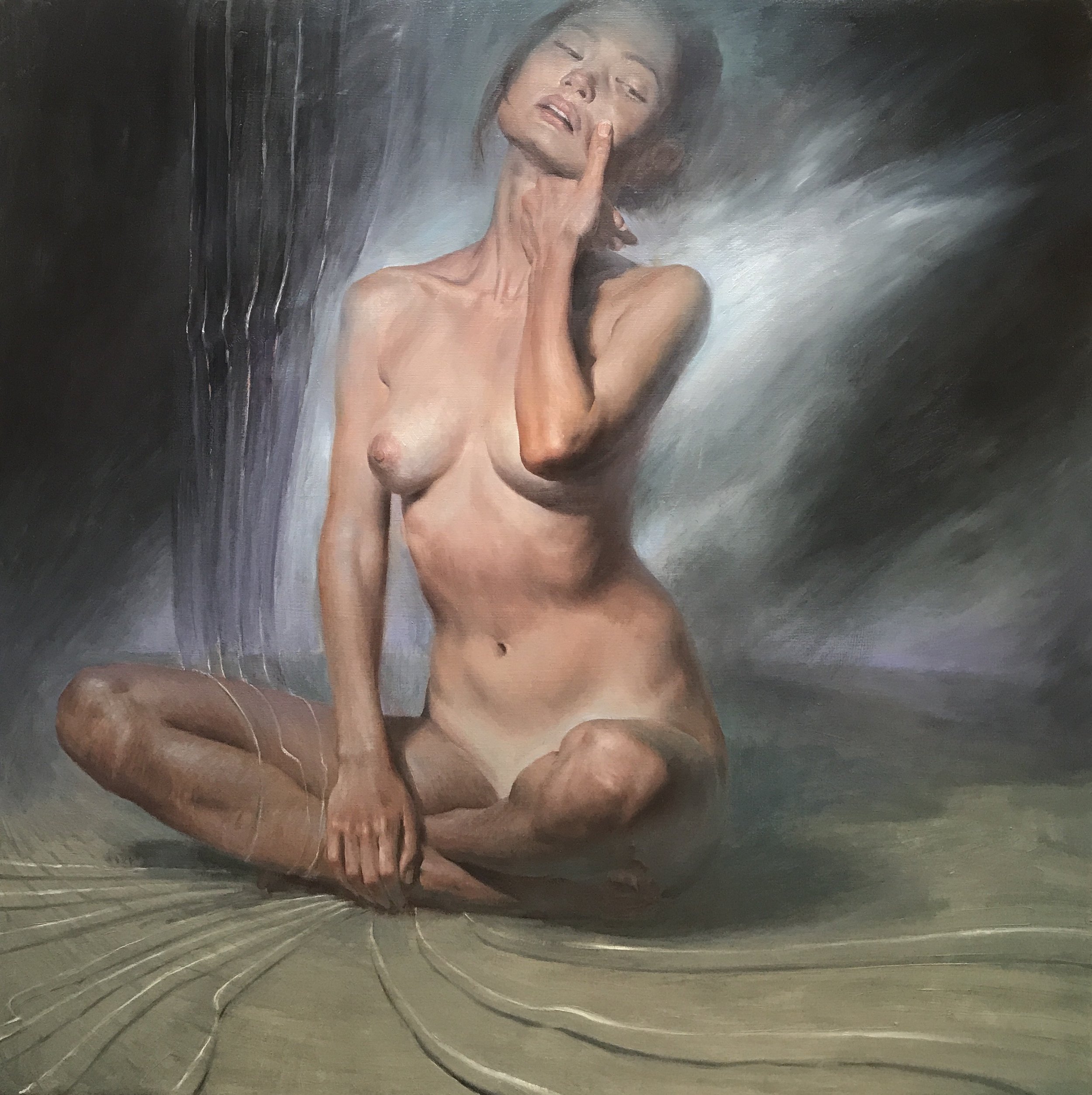
In this case you can see I have simply begun by generally creating a colour context for the figure with a rough background, which allows a fairly direct painting of the figure part by part, a process favoured in the 19th century and also necessarily utilised with fresco painting (which demands finishing an area at a time because one must paint onto plaster laid that morning). I don’t always work this way, sometimes focussing more in terms of tonal impressionism and establish broad general areas rather than thinking primarily about drawing. But this approach suits me because the emphases/exaggerations of the drawing, as well as the rhythms of masses, are the framework out of which the colours and tones will be derived, and provides a guide for the directional application of paint.
In the end, rhythmic, gestural and spatial qualities emphasised/distorted in line point always to composition, to the idea of meaningful integration - with this supported by the texture, colour and physicality of sculpture or painting.
I’ll be writing a separate blog soon about how the emphases that are done during drawing can imply both the interiority of the subject and the artist, and how the sequential caligraphy of marks can transmit this information, stay tuned!
In person class Brisbane:
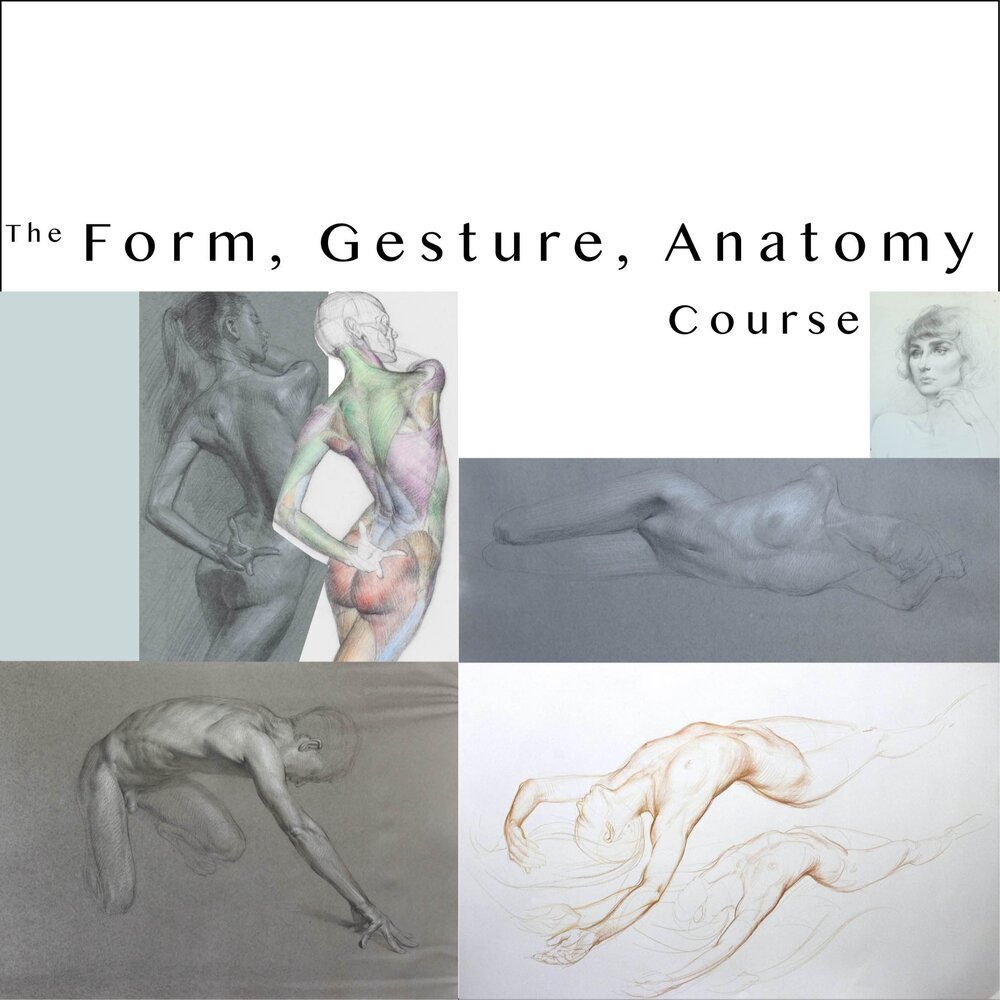
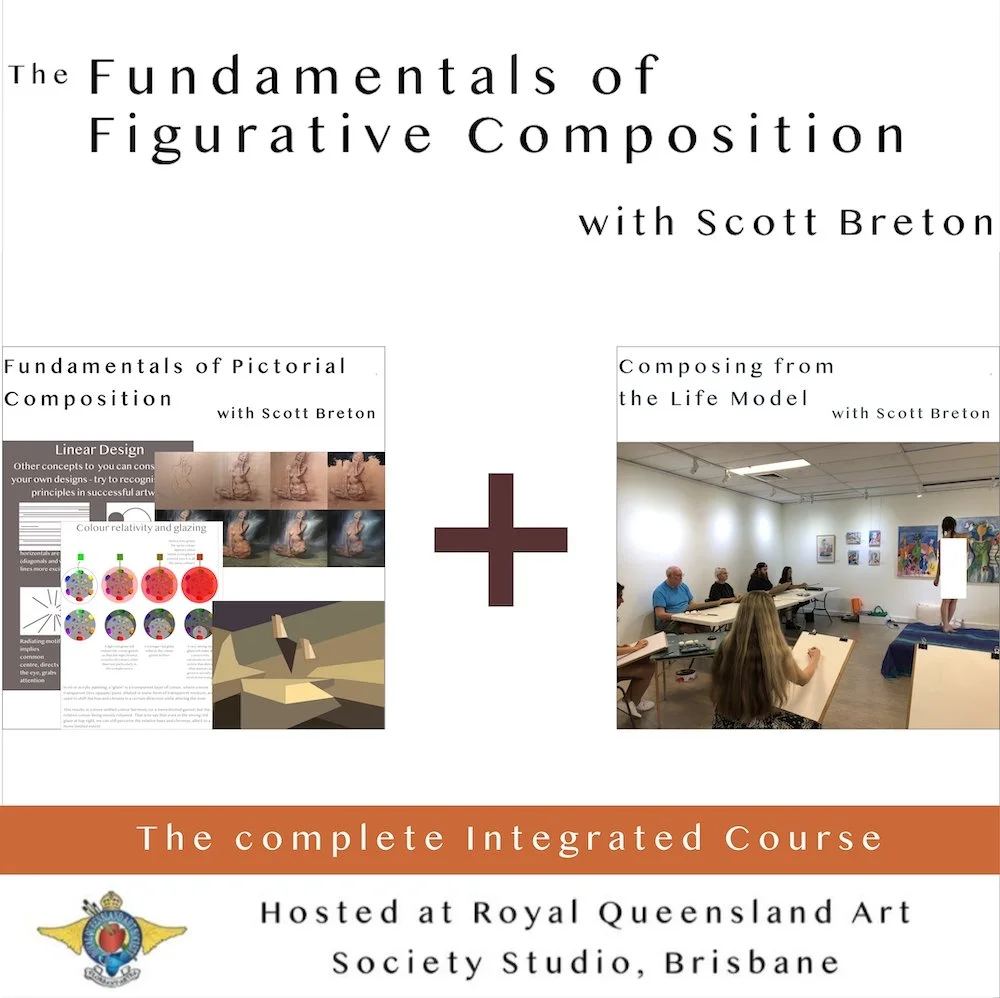
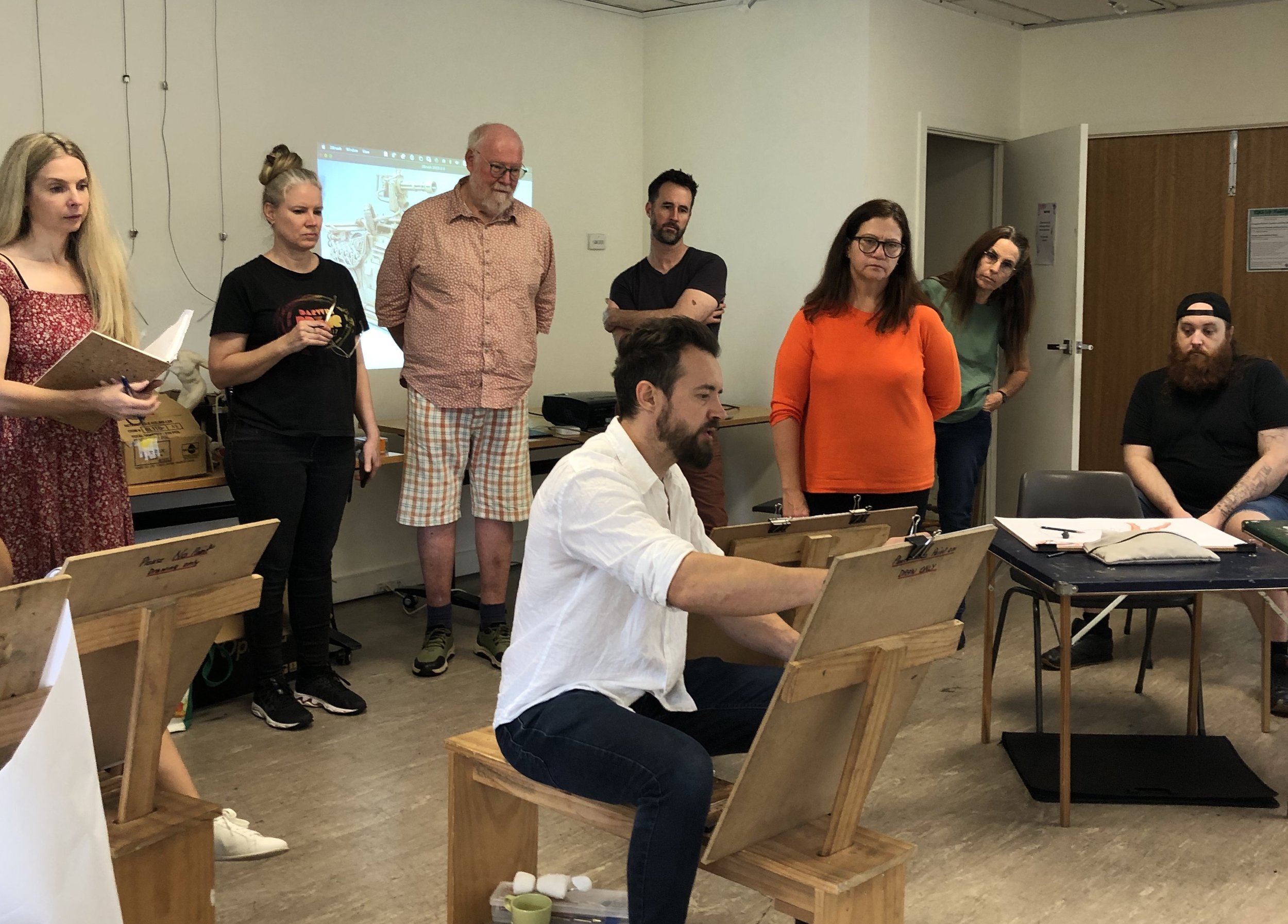
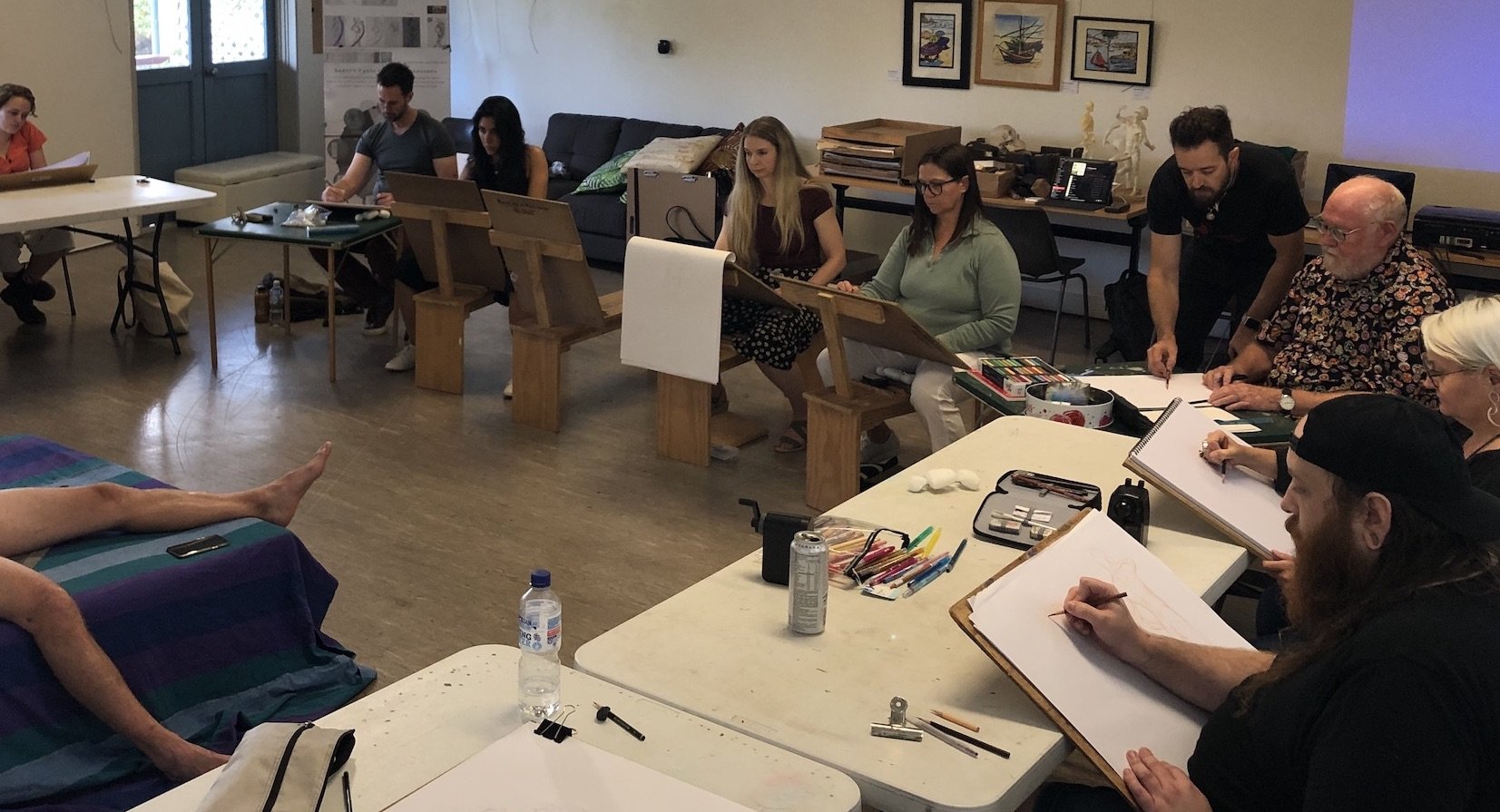
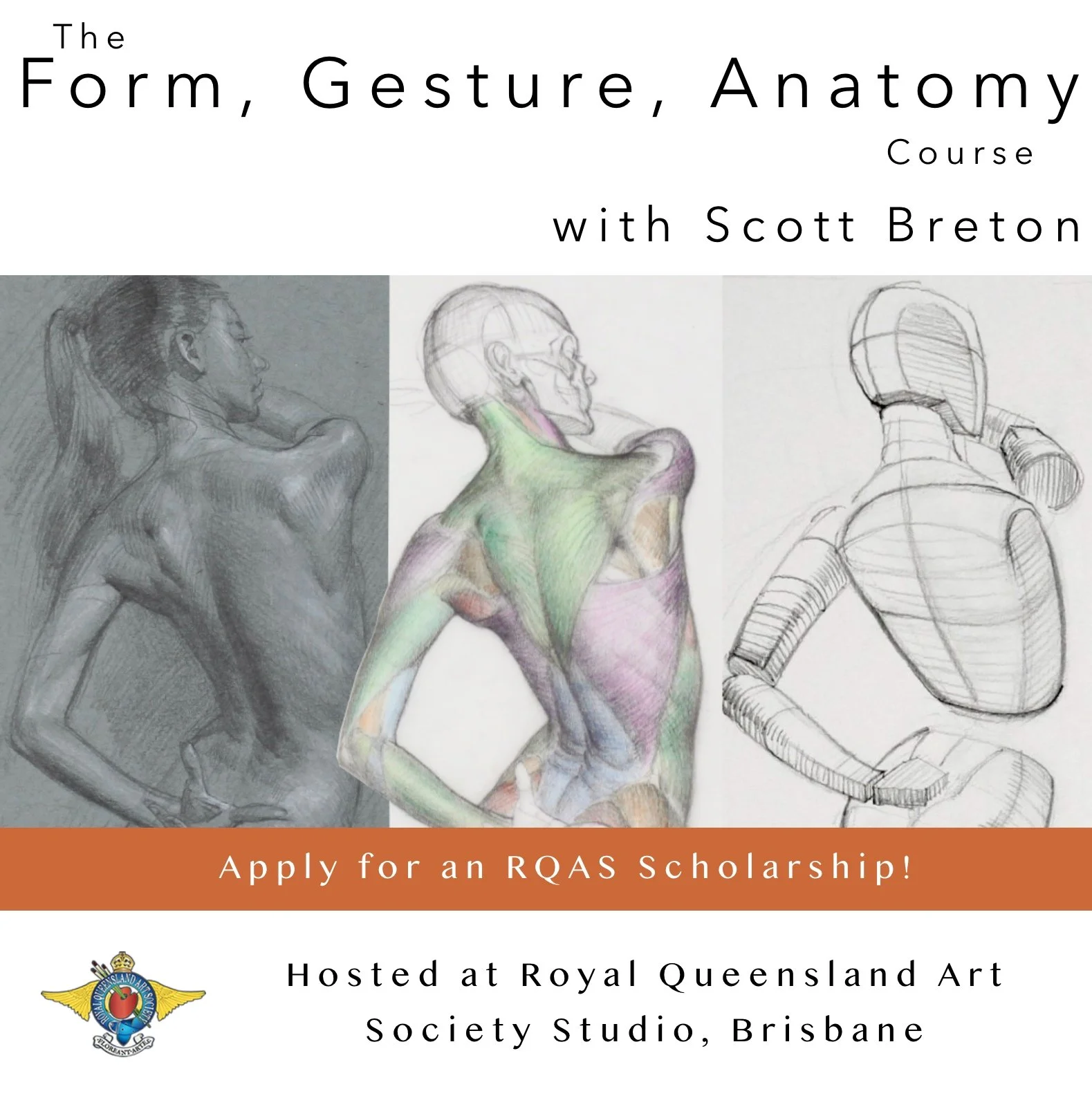
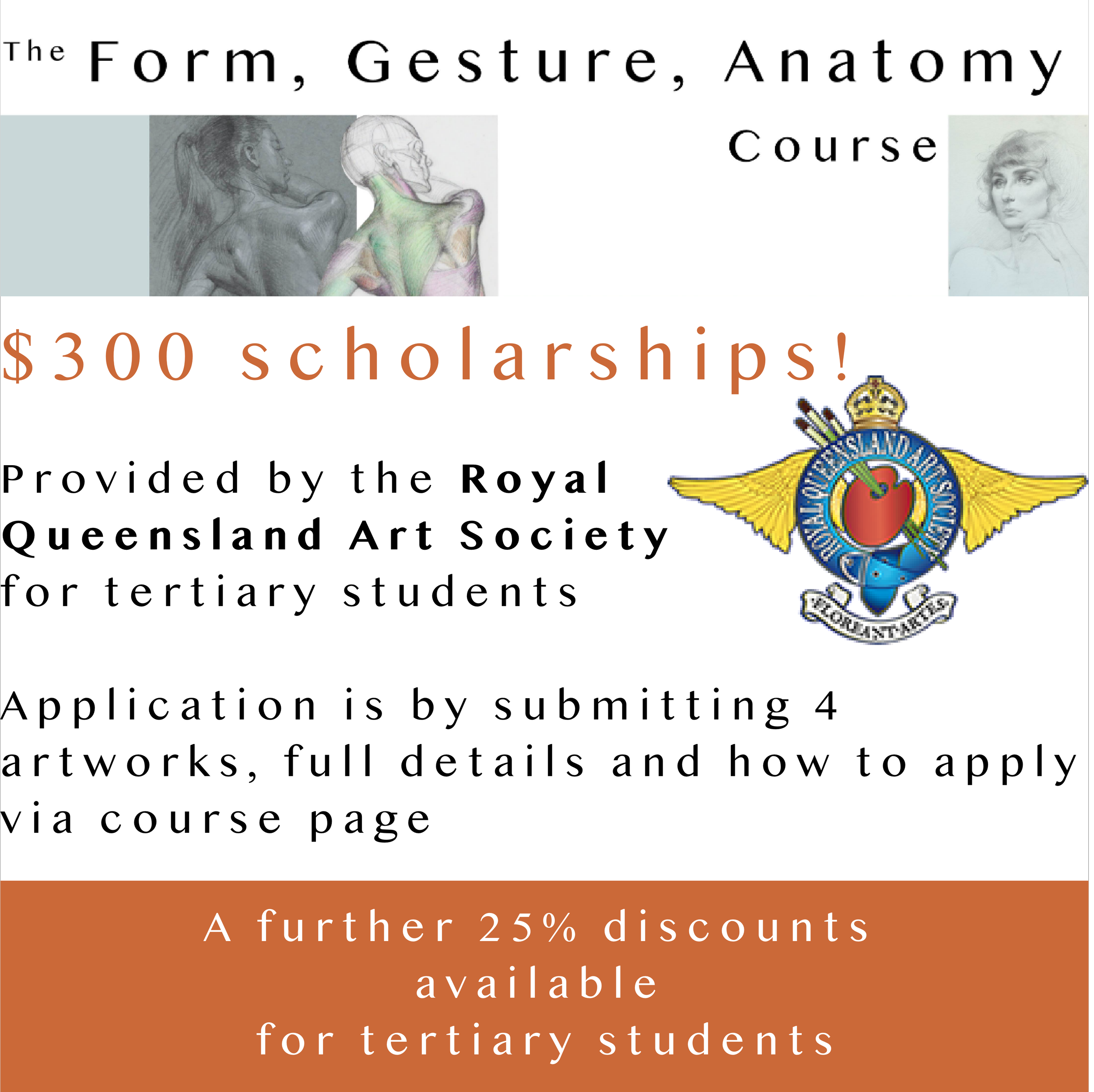
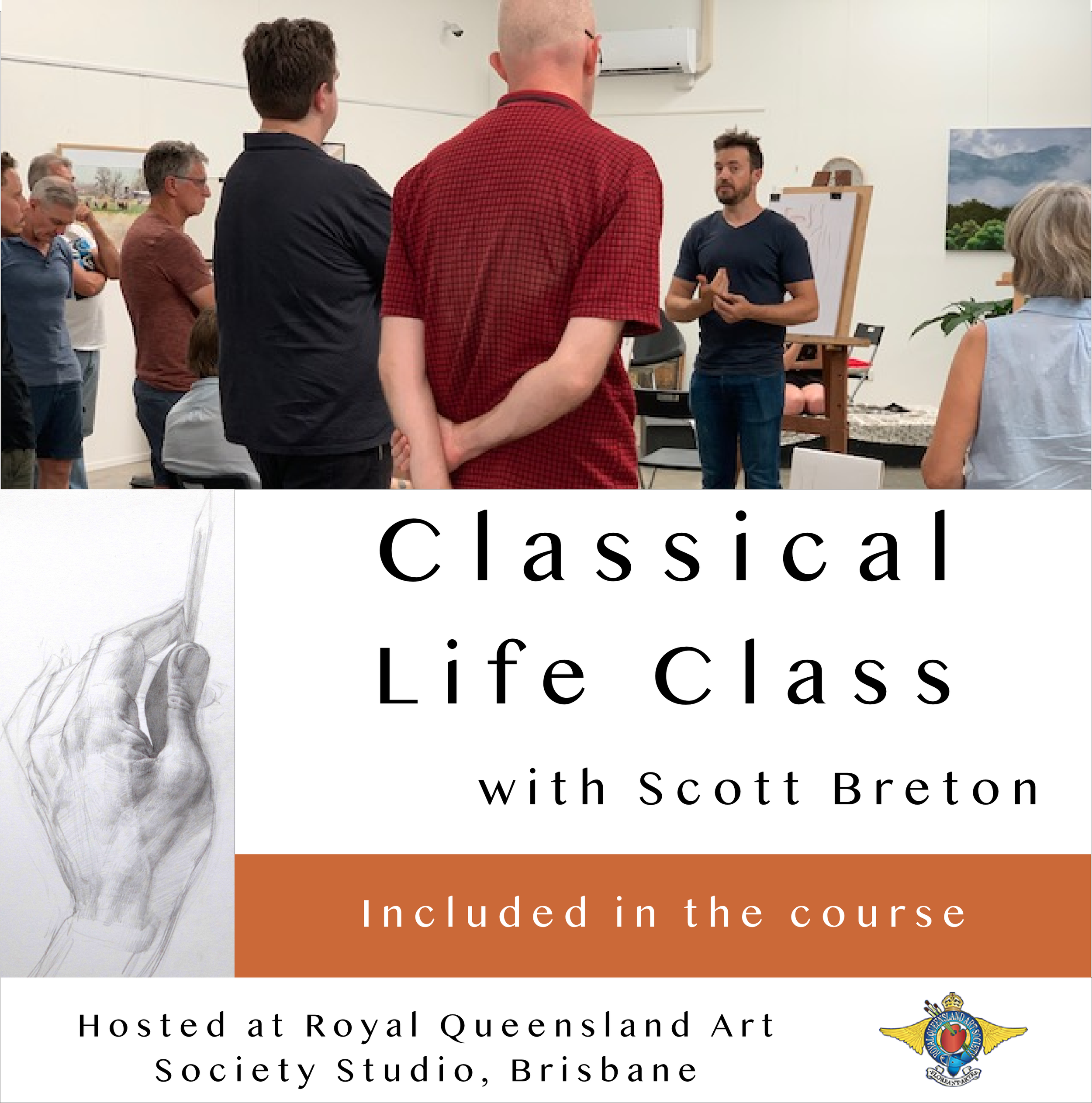
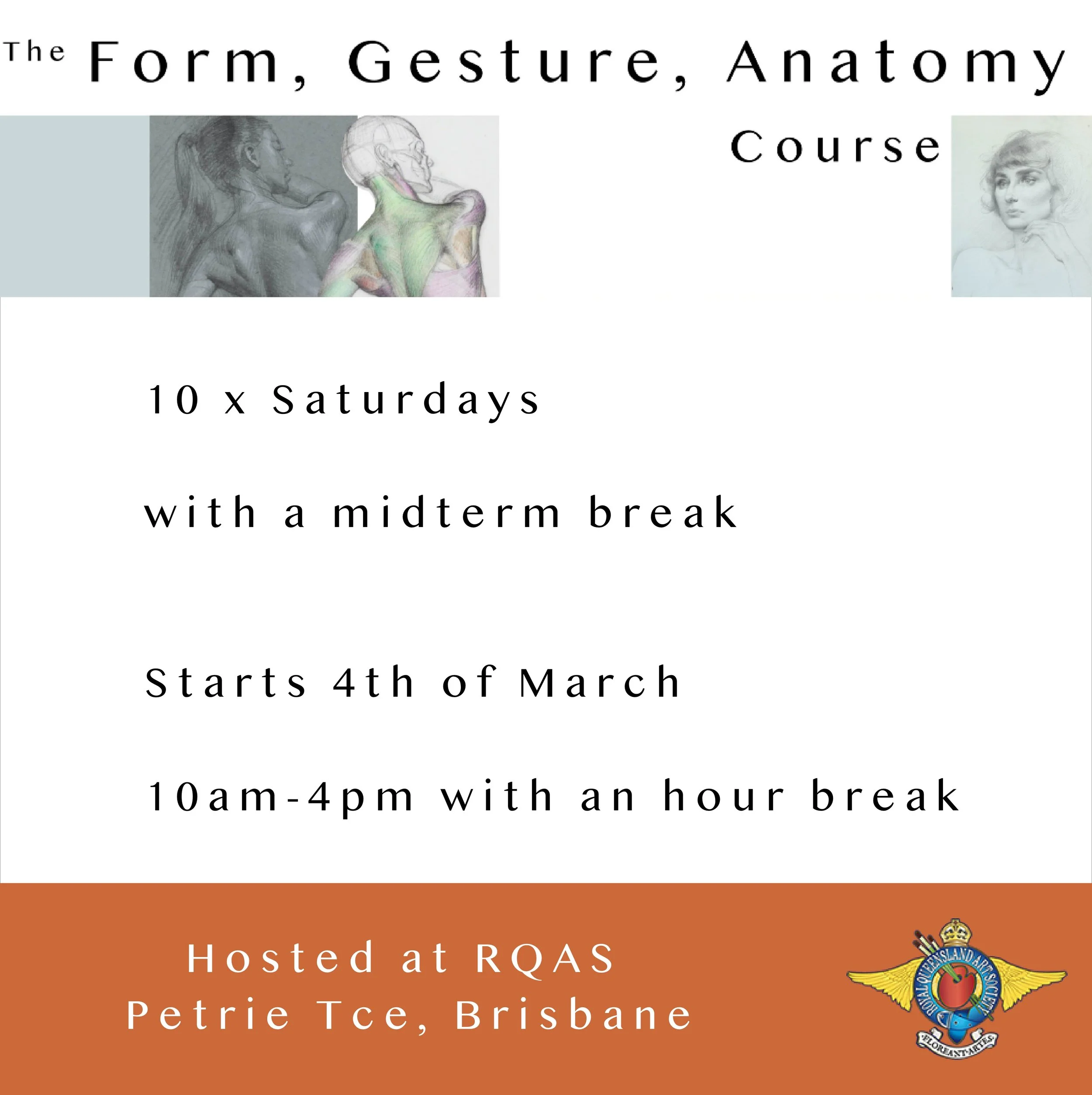
If you are in Brisbane and wish to do the class with me, which breaks down my drawing process and provides a series of drills to develop each of the elements in your own drawing, you can add your email to be notified when term 3 dates are announced: https://scottbreton.art/notify-me-classical-life-class
Curriculum summary:
https://scottbreton.art/lifeclass
Online Book version of the course:
My online book about drawing can be found here: https://scottbreton.art/full-basic-ecorche-and-gestural-life-drawing-course