Why Pursue Art in the Age of AI?
What the machines reveal about what makes us irreplaceable
I've been thinking a lot lately about a question many artists are wrestling with: Why keep making art when AI can generate images in seconds?
I perversely enjoy when technology real-worlds questions of philosophy. And I think it actually is a fair question, because while we might intuitively dismiss the question as ignorant, it can be hard to specify the answer.
And I think the answer reveals something profound, not just about art, but about what it means to be human.

The Gift of the Mirror
AI has done something unexpected: it has shown us, with startling clarity, what actually matters about art making.
Just as photography once forced painting to confront its true strengths (painters could no longer compete on mere documentation and had to dig deeper into expression, composition, and meaning) AI is doing the same thing now, but more radically.
The machines can simulate surfaces brilliantly. They can remix styles, generate compositions, and produce technically impressive images. What they cannot do, what they will never be able to do, is become something through the making.
And that's the heart of it.
The Transformation That Matters
When you spend hundreds of hours learning to draw the figure, your brain rewires. Your capacity to see changes. You begin to perceive rhythms, weights, tensions that were invisible before. The discipline doesn't just produce drawings: it transforms the one doing the drawing.
This is what I call embodiment: the process by which a skill merges with the self. The technique hybridizes with the psyche. You don't just know anatomy in an abstract way - it becomes part of your perceptual apparatus, stored in your hands, your eyes, your intuitive sense of form.
Using AI to generate an image skips all of this. It produces output without experience. It has no body to remember with, no struggles that shape its vision, no midnight hours of doubt that deepen its empathy. Which means you, as an individual miss out on becoming something new by your blood, sweat and tears. You miss out on being part of the community of people who can instantly recognise someone who knows how to draw, who gets it.
And audiences too can sense this to some extent. We are drawn to work that carries the weight of genuine human experience: the evidence of someone having wrestled with form, with meaning, with their own limitations and breakthroughs. I suspect that going forward this sense will become more important than ever as the artificial pervades the world. We will want more than ever the imperfect excellence achieved by a human above standard-issue artificial perfection.
The Slow Work
Here's something else AI reveals: the value of patience itself.
We live in a culture of passive consumption, of infinite scrolling, of dopamine hits delivered on demand. Everything is optimized for speed, for ease, for the next quick fix. Against this backdrop, the decision to spend months, sometimes years, on developing a single painting or even just a few hours on a drawing is almost countercultural.
Making art demannds a different relationship with time. It requires sitting with discomfort, working through the inevitable disasters, returning day after day to something that may be fighting you at every turn. There's no algorithm to make it easier, no shortcut through the messy middle of a difficult piece.
This patience, this resilience, becomes its own form of cultivation. You learn to tolerate frustration. You develop the capacity to hold a vision even when the work looks terrible. You build the kind of focused, sustained attention that our fragmented culture desperately needs but rarely values.
And here's the paradox: this slow, difficult work often yields the deepest satisfaction. Not the quick pleasure of a like or a share, but the earned sense of having struggled with something real (and in physical reality) and emerged changed. The painting that nearly defeated you but finally came together teaches you something prompting cannot.
In an age of instant generation, slowness becomes radical. Patience becomes a form of resistance. The artist who spends six months on a single figure is asserting something profound about what it means to be human: that we are not mere consumers, but makers who transform ourselves through sustained engagement with difficulty.
Seeds for the Eye
I think of artworks as seeds.
Apparently inert, deceptively material, they hold deep potential. A painting is a compression of hundreds of hours of feeling, reflecting, shaping. The artist's research, choices, and intuition (all crafted by years of practice) can reach into the consciousness of the viewer in an instant.
While a novel or play takes time to unfold, a well-crafted image can transmit movement, life, form, and light in seconds. And the viewer experiences not just the subject, but the way of being that created it. This is the magic: the artist's state of mind during those hundreds of hours somehow seeps into the work and is read by the viewer. The viewer knows that are there, that they are unique and imperfect.
AI cannot plant these seeds. It has no interior landscape to compress, no journey to share, no genuine struggle with mortality and meaning to transmit.
What We Actually Value
The rise of AI reveals a truth we perhaps always knew but can now see clearly: what we value in art isn't just functionality or surface appearance.
We value the interiority of the maker. We value the evidence of a mind that has grappled with existence, a hand that has learned through failure and persistence, a vision that has been earned through disciplined cultivation.
When you look at a Rembrandt self-portrait or a Rodin sculpture, you're not just seeing technical mastery. You're witnessing the trace of a human consciousness that wrestled with light and shadow, with aging and dignity, with the mystery of embodied existence. That struggle is in the work. It cannot be faked.
AI will replace many functions, and this is actually liberating. It shows us that what truly matters about being human is not our utility but our experience of ourselves and the world. Robots might become workers, but they will never satisfy our need for connection to another being with an interior world relatable to our own.
The Path Forward
So what does this mean for artists in the age of AI?
It means doubling down on what makes us irreplaceable: embodied practice. The cultivation of genuine skill through hours of disciplined work. The development of an interior landscape rich enough to be worth sharing by compressing into visual form. The courage to wrestle with meaning in an age of easy surfaces.
This isn't a retreat into nostalgia. It's a recognition that the deepest value art offers has always been relational and human. AI hasn't diminished this: it has made it more visible, more precious.
The world needs artists now more than ever. Not for the mere function of producing pretty pictures (machines can do that), but because it matters that human beings continue to know what it is like to be an artist, to strive to live up to the examples of the greats of the past.
We are witnesses, interpreters, meaning-makers. We compress lived experience into forms that can inspire, console, and enlarge others.
This is the nobility of our craft: we throw our light into the void, despite our fragility, and the ceaseless horrors and corruption continuing to be reported in the news, and the apparent futility that can creep up on us. And in doing so, we redeem something, not only for ourselves, but quietly, gradually, for the world.
The Invitation
If this resonates with you, if you feel called to this path of embodied artistic practice, know that you're not alone.
My teaching is built around this philosophy: that genuine skill, cultivated through disciplined practice and integrated with a searching, meaningful way of seeing, is what creates art that matters. Whether in my Form, Gesture, Anatomy course or my weekly drawing sessions, I'm interested in helping artists develop not just technical facility, but the kind of embodied knowledge that can't be automated. Because no machine has your hands, and can experience for you what it is like to sense the forms of nature through the embodied skill of a pencil or brush.
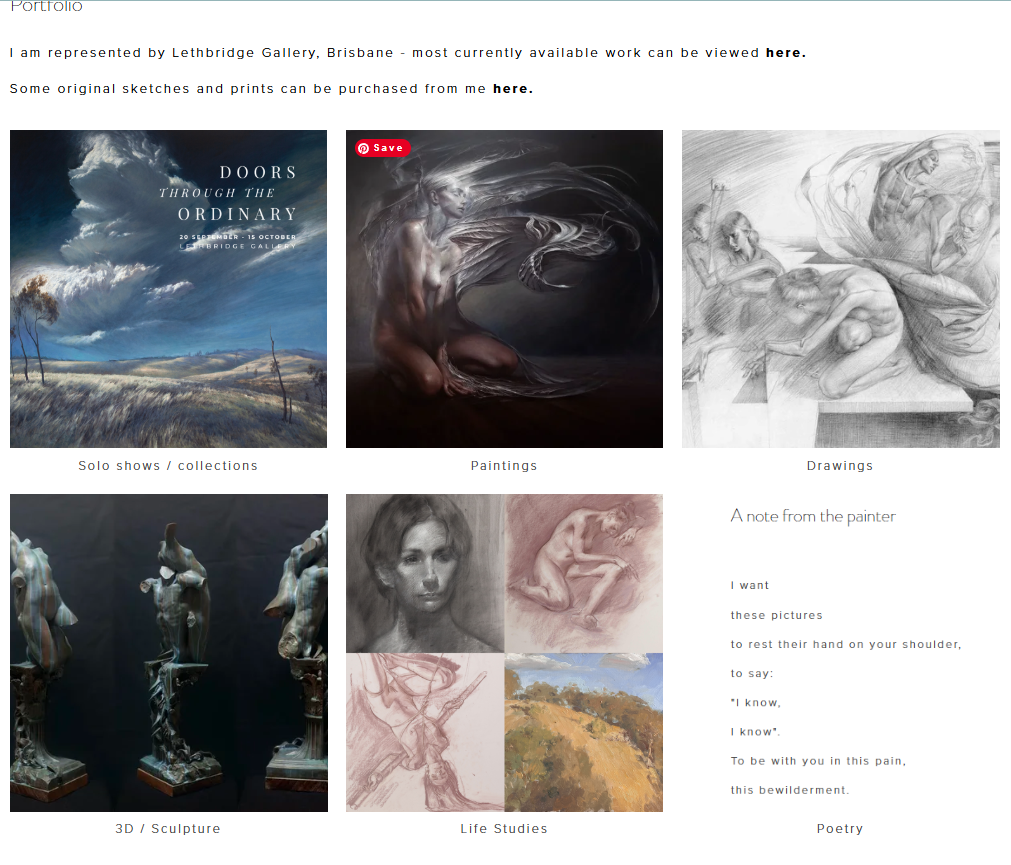
I've also just updated my portfolio to be better organised and include recent work: pieces that represent this philosophy in action. Lots of new life studies of portraits and figures in there now too.
You can view it at scottbreton.art/gallery.
For those in Brisbane, I have several upcoming opportunities to study together:
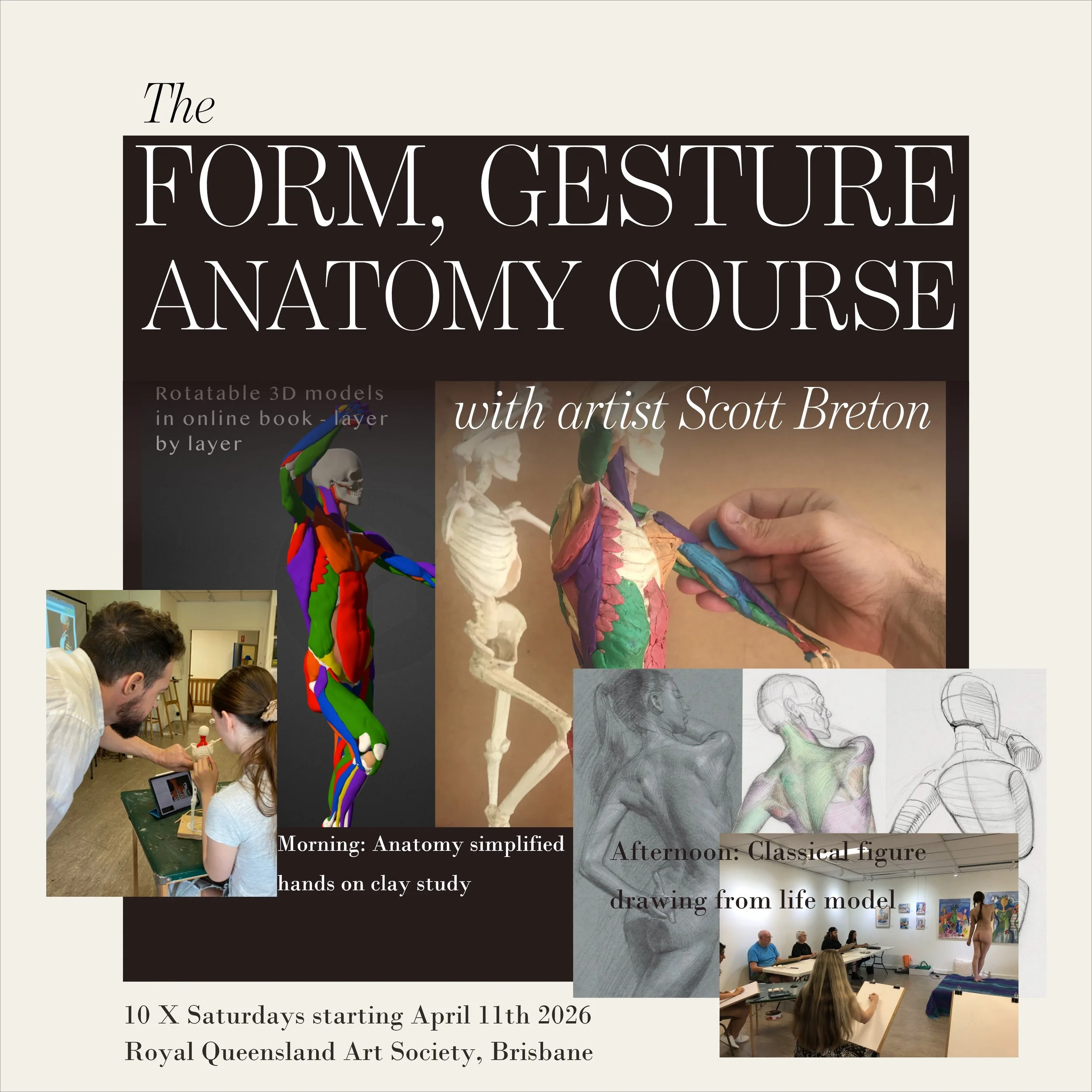
My FGA (Form, Gesture, Anatomy) course integrates artistic anatomy with classical life drawing. Starting April 11th at the Royal Queensland Art Society, Petrie Terrace, Brisbane
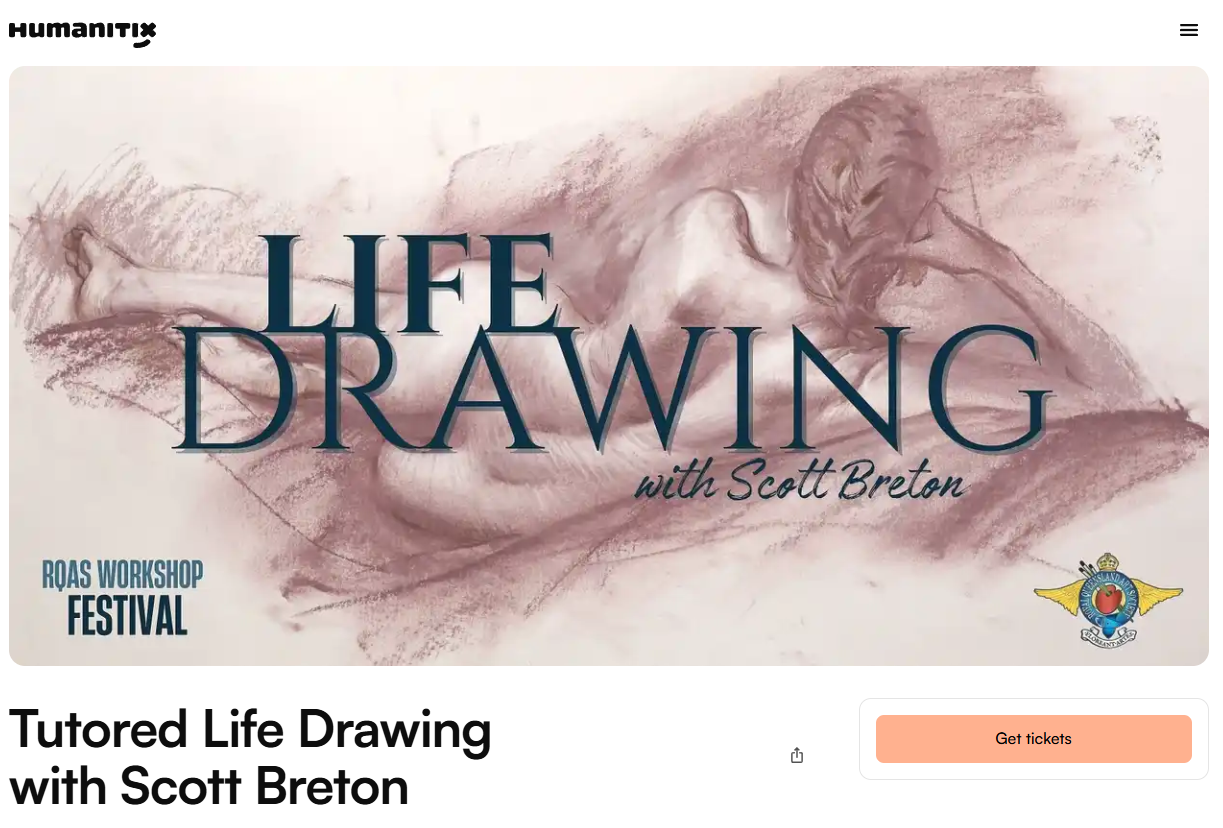
As a part of the RQAS Workshop Festival, I will be running a tutored life drawing session on Wednesday 25th March 6:30-8:30pm.
In this 2 hour class, I will provide you the two core approaches I use to rapidly improve your ability to see in spatial, anatomical and gestural essentials. This will give a good overview of what I teach in longer figure drawing courses and provide you with actionable drills you can take away and practise by yourself.
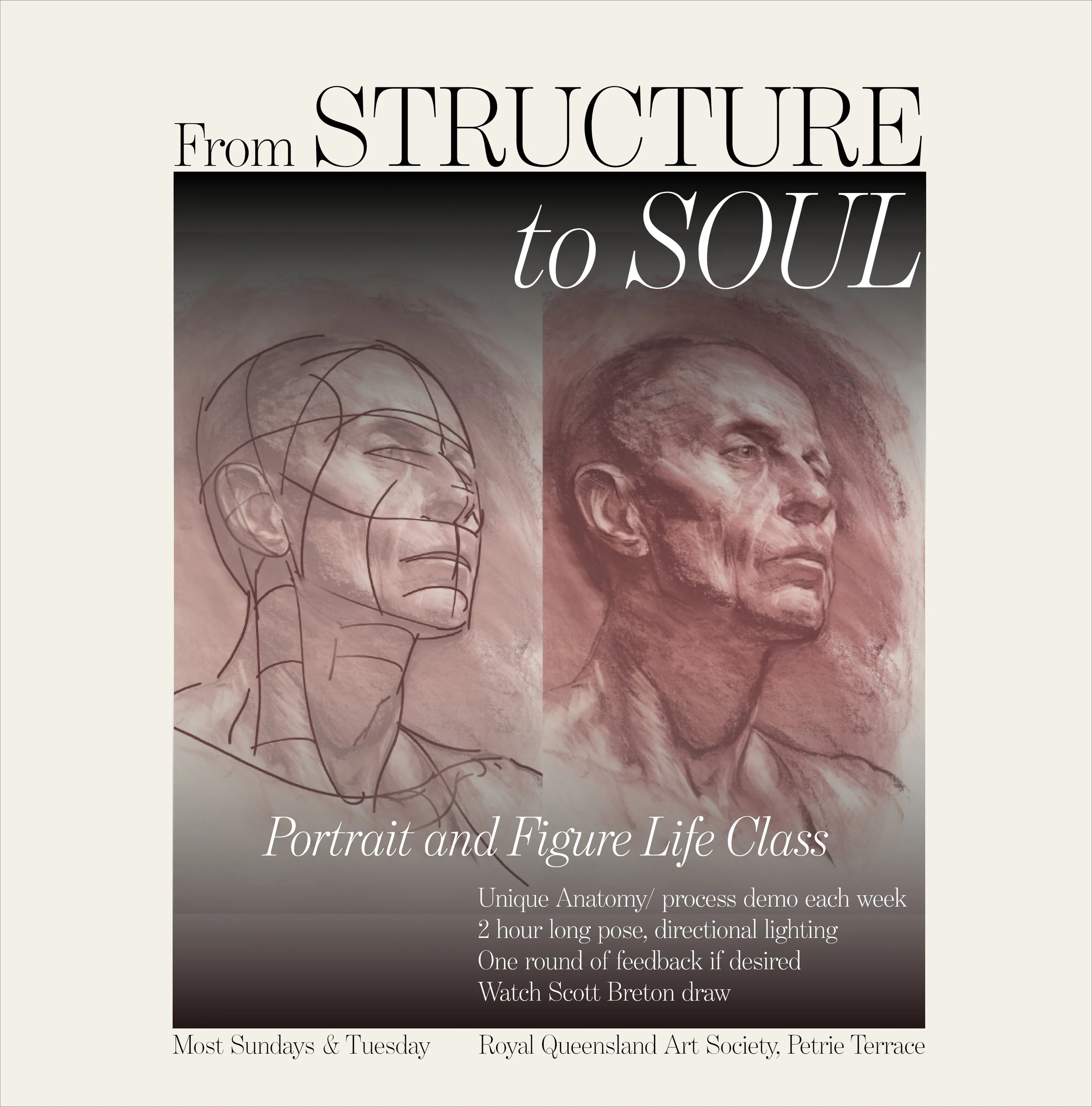
Weekly "Structure to Soul" portrait and figure drawing sessions will return very soon likely around the 22nd Feb (tbc). These sessions alternate portrait and figure long poses with anatomy demos and individual feedback
For those elsewhere in the world, the FGA course is available online, and I offer small group and individual mentoring sessions as well.
Details at scottbreton.art/tuition
The machines have given us a gift: they've shown us what we are not. We are not mere processors of visual information. We are embodied beings who transform ourselves through disciplined practice, who compress meaning through conscious struggle, who connect to each other through the evidence of genuine interior experience.
This is why we make art. This is why it matters. And this is why, in the age of AI, the artist's path is more vital (and more human) than ever.