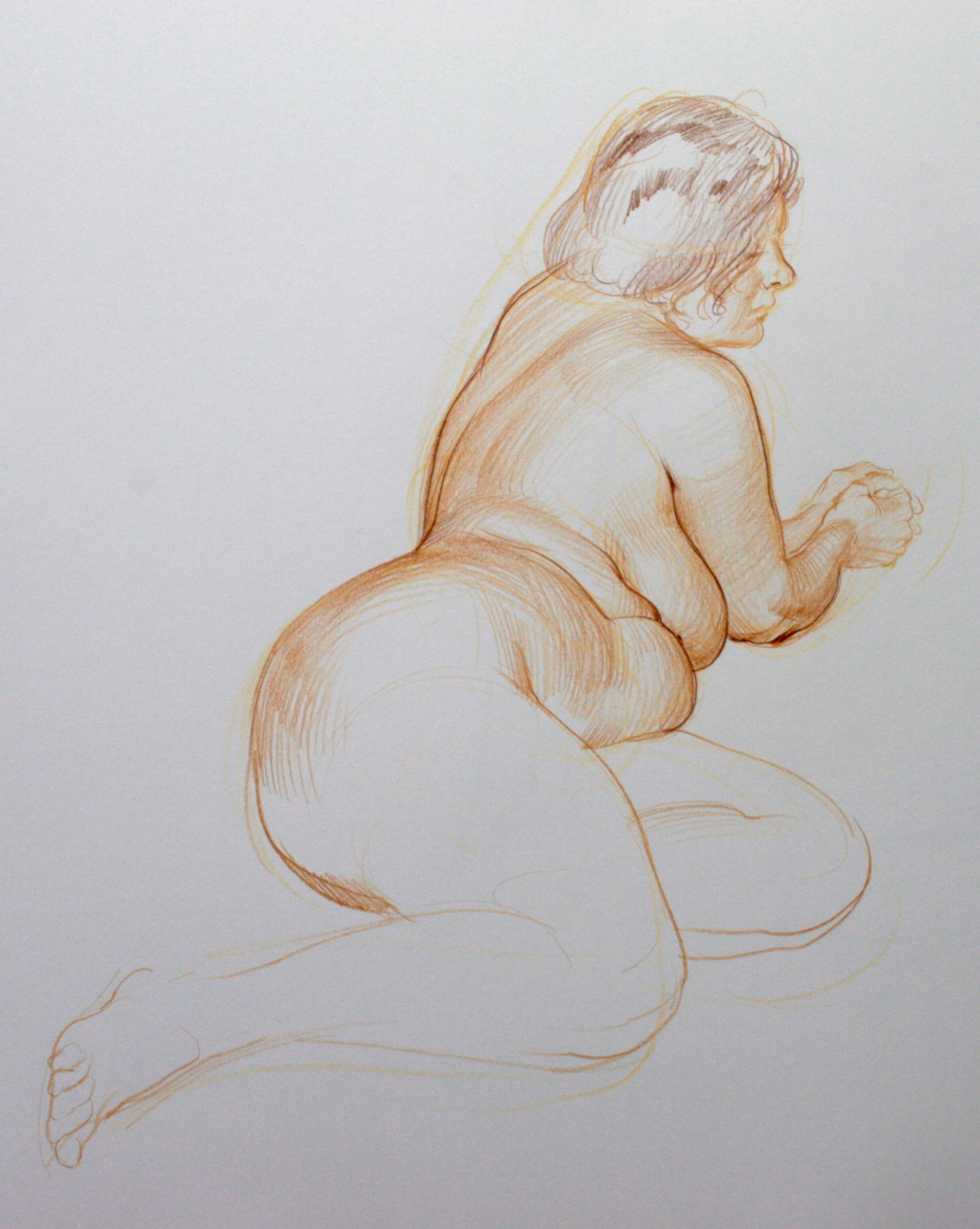
Working on "Annunciation by Muse" Oil on Aluminium 136 x 84 cm
"Orpheus" Oil on Aluminium 87 x 117 cm
"Orpheus" Oil on Aluminium 87 x 117 cm
Working on "Annunciation by Muse" Oil on Aluminium 136 x 84 cm
Use Sketchfab to publish, share and embed interactive 3D files. Discover and download thousands of 3D models from games, cultural heritage, architecture, design and more.
Use Sketchfab to publish, share and embed interactive 3D files. Discover and download thousands of 3D models from games, cultural heritage, architecture, design and more.
Use Sketchfab to publish, share and embed interactive 3D files. Discover and download thousands of 3D models from games, cultural heritage, architecture, design and more.
Use Sketchfab to publish, share and embed interactive 3D files. Discover and download thousands of 3D models from games, cultural heritage, architecture, design and more.
These words from Dali's autobiography "The Secret Life of Salvador Dali" were recently sent to me by a friend following a conversation we had about classicism and integration in art - I had to share.
"We were consumed over reproductions of Raphael. There one could find everything - everything that we surrealists have invented constituted in Raphael only a tiny fragment of his latent but conscious content of unsuspected, hidden and manifest things. But all this was so complete, so synthetic, so "one", that for this very reason he eludes our contemporaries. The analytical and mechanical short-sightedness of the Post-War period had in fact specialized in the thousand parts of which all "classic work" is composed, making of each part analyzed an end in itself which was erected as a banner to the exclusion of all the rest, and which was blasted forth like a cannon-shot.
War had transformed men into savages. Their sensibility had become degraded. One could see only things that were terribly enlarged and unbalanced. After a long diet of nitroglycerine, everything that did not explode went unperceived. The metaphysical melancholy inherent in perspective could be understood only in the pamphleteering schemata of Chirico, when in reality this same sentiment was present, among a thousand other things, in Perugino, Raphael or Piero della Francesca. And in these painters, among a thousand other things, there were also to be found the problems of composition raised by Cubism, etc., etc.; and from the point of view of sentiment - the sense of death, the sense of the libido materialized in each coloured fragment, the sense of the instantaneity of the moral "commonplace" - what could one invent that Vermeer of Delft had not already lived with an optical hyper-lucidity exceeding in objective poetry, in felt originality, the gigantic and metaphorical labour of all the poets combined! To be classic meant that there must be so much of "everything", and of everything so perfectly in place and hierarchically organized, that the infinite parts of the work would be all the less visible. Classicism thus meant integration, synthesis, cosmogony, faith, instead of fragmentation, experimentation, scepticism."
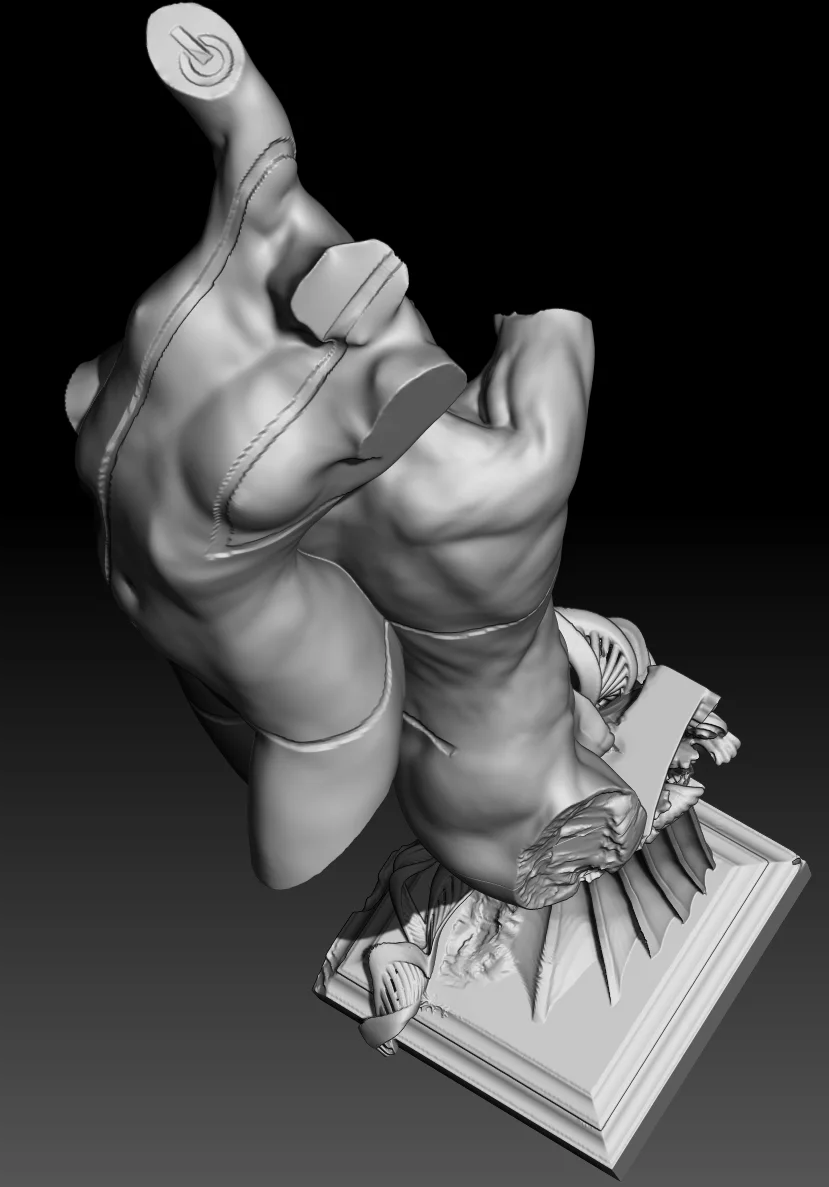
Below is a cropped version (limbs and head removed) of a figure I made in zbrush.
I applied a timber grain texture of Queensland Red Cedar to the digital model to get an idea what it would look like if it was carved in this timber.
Click to load and rotate/zoom/pan etc.
Click the little eye button and then "help" for more details about how to navigate the 3d model.
Use Sketchfab to publish, share and embed interactive 3D files. Discover and download thousands of 3D models from games, cultural heritage, architecture, design and more.
One of the free resources I have added to this website recently includes some of the course notes from the Fundamentals of Head Construction course. Click here or the images below to view these resources.
I have included the 3D models from my Form, Gesture, Anatomy course about building the skull. This course provides students with many 3D models of this kind that can be viewed on your smart phone, tablet or computer. This workshop will be run for 8 consecutive Sundays from the 13th March 2016. A few places are still available at the time of writing so send me a message to enrol if you don't want to miss out!
To explore the model, click the triangular play button to load the embedded 3D model
Pinch to zoom on touch devices, a scroll with a mouse
Swipe to rotate on touch devices, or click drag to rotate with a mouse
This is one of the models from my artistic anatomy and life drawing course "Form, Gesture, Anatomy". More about this course, when and where the next one will run, and many free diagrams and course notes are available at the webpage: http://www.scottbreton.com.au/anatomy-and-gestural-figure-drawing


For more information, see the details and sample notes from my tuition section:
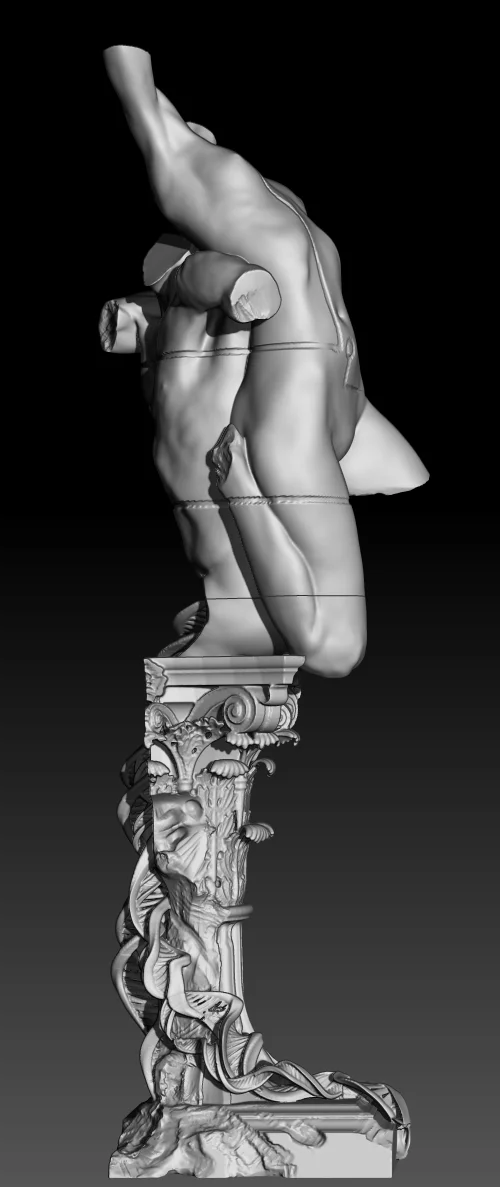
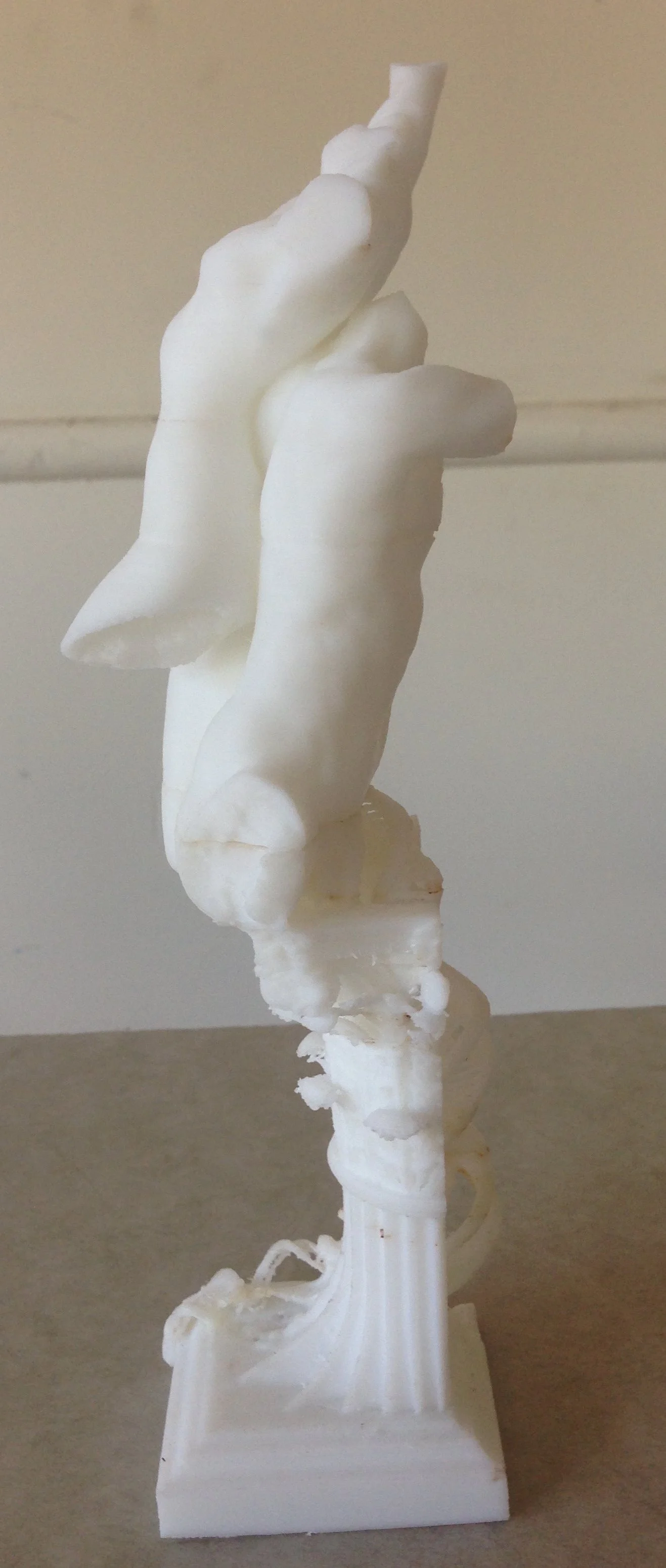
This composition, also developed in ZBrush, reworks a couple of figures that I previously sculpted into a new composition (including the torso of the female figure in "Singularity Koan" in the preceding post).
The working title is "DNA to Digital" and is partially inspired by design motifs found in popular culture including sci fi action flick "Tron". I find it fascinating to work in the digital realm and then pull the product of this work into our own physical space through 3D printing (I use a small home printer). This sense of the two worlds we inhabit - the physical Earth and the online/digital - and the blurring of the line between them has inspired so much of popular culture as well as serious science fiction - and has become part of our contemporary mythology.
Digital Renders:
3D Print:
This year I bought the digital sculpting application Zbrush and have put quite a lot of time into learning the basics.
This is a sculpture I began in the free version of Zbrush "Sculptris" and then developed in Zbrush as I learned the software.
The title is "Singularity Koan". Singularity here refers to the "Technological Singularity" that has been well discussed in the media. Koan is a type unsolvable riddle or paradoxical saying used in Zen Buddhism to promote a shift in consciousness. Contemplation of the apparent inevitability and concomitant uncertainty of the technological singularity had (and continues to have) a similarly disruptive effect on me - a jolt out of a customary, day-to-day dreary way of seeing the world and my life, into seeing our place in the broad sweep of history, and has caused me to question what is meaningful in my life and human life in general. I have found this to be a refreshing, if startling, effect - much as a near death experience can be. I will say no more and let you, dear viewer, investigate the symbols in the composition for yourself.
I am still working on this piece but it gives an idea of the composition at this stage.
Digital renders in Zbrush:
3D print:

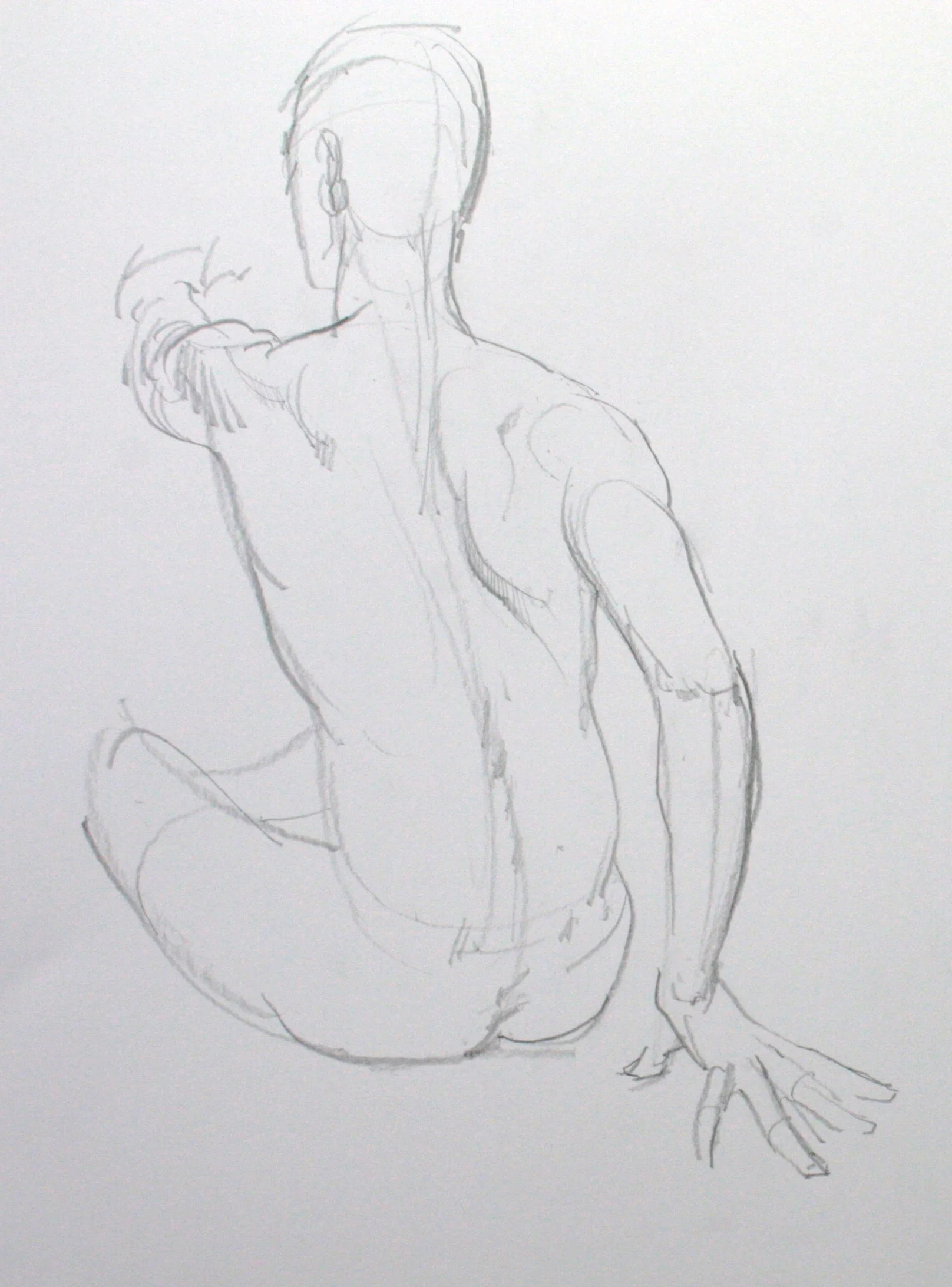
I'm posting Life studies, tuition diagrams, works in progress and completed new work here.
Top Row: Graphite Pencil, Bottom Row:Graphite Block and Coloured Pencil
This is a cropped version of the torso of orpheus, textured in red cedar timber grain, to simulate what it could look like carved in this material.
Digital sculpture done as a reference for developing an earlier composition about the Greek tragedy of Orpheus and Eurydice. Sculpted, painted, rendered and animated as a turntable in zBrush 4R7
I have recently begun to learn to sculpt digitally. Though I find it useful to sculpt in clay to develop my figures in the round, I am pursuing digital sculpture as well in order to have greater freedom to play with the arrangement of figures in space. This is inspired by such things as the sculptures of Bernini (see the next blog entry for some drawings of his "Apollo and Daphne", a magical spiralling orchestration of human figures, fabric, tree branches and the earth base) and my time studying with Nicola Verlato in Los Angeles, whose use of both physical and digital modeling techniques inform his wild symphonies of form.
So here are my first efforts with Sculptris (a free program made by the makers of ZBrush). The figures are based on reference from www.posespace.com, which provides artists with pictures of poses at 15 degree intervals all the way around.
Starting from a sphere, the forms of the head are gradually pulled and pushed out.Details can be added to the general forms


Again, starting with a sphere, I developed a symmetrical torso, posed it and added arms and legs, continuously rotating the piece to try to mentally integrate the forms from the flat screen as you would when working from life.a different view
Click to enlarge
These paintings are currently at the Orange Regional Gallery for the Journeys West Exhibition , a group show opening 3rd October and on until the 14th of November 2014. With each picture is an explanation of how I see them relating to the theme "Journeys West".

"Light Fading: Jimmy and Ethel Governor at "the Drip" Gorge"
1m x 745mm, Oil on aluminium panel, $1500
Jimmy Governor was a part aboriginal man who became one of Australia's last bushrangers, Ethel was the white woman he married. It is a very dark story of racial discrimination and very terrible choices, and it captured my imagination with its mythic quality and horrific outcome. Despite growing up in Australia, I had never heard of this story before coming to the area for research for the show. Much of the story occurred near the town of Ulan, a couple of hours drive north of Orange. Also near Ulan, is "the Drip" Gorge, the setting for this picture, which is an extraordinarily beautiful area, that is now threatened by the expansion of a nearby coal mine. Kay Kane and I travelled to this gorge during May to work from this landscape, I was struck by the sense of impending tragedy contained in both "the Drip" Gorge's current predicament and the painful days that must have led up to Jimmy Governor's first homicide.
 "Rehearsal Space #7"
1.5m x 925mm, Oil on aluminium panel, $3300
This painting is connected to the theme of the show in a more abstract way. "Jouney's West" evokes for me a journey into the wild or the unknown. This painting is more about an introspective moment and the untamed, animal intensity that can be seen inside, pulling us in multiple directions, shaping our behaviour, if we are prepared to look.
 "River Stone to Gibber Stone"
1m x 745mm, Oil on linen, $1500
This still life contains a river stone from the farm I grew up on in the Sunshine coast hinterland, and a gibber stone from the gibber plains out near Innamincka, which is near the border of Queensland and South Australia. I travelled there with my father on a couple of occasions. These trips held particular significance for me because he had worked near there as a stockman and yard builder before I was born, and I had grown up with the stories from his time working there. The old stock saddle evokes for me my childhood (as I rode in a similar one at the time) and also the early explorers and surveyors integral to Australian folk lore.
 "Grain of Sand"
870 x 1320mm, Oil on aluminium panel, $2100

"Orpheus, Dia de los Muertos"
900 x 900mm, Oil on aluminium panel, $1900
These three pieces will be available for sale at the Brisbane Grammar School annual art show "Sapphire". The opening will be Friday the 22nd August (ticketed event) and the show will be open to the public on Saturday the 23rd of August, coinciding with the school open day.
Prices and further details are available through the online catologue, my pieces are items 34, 35, and 36: